Online Raffle: The Complete UK Guide
An online raffle lets you sell tickets, manage entries, and run a prize draw digitally — without relying on physical ticket stubs or face-to-face sales. For charities, schools, PTAs, and community groups across the UK, moving your raffle online can dramatically widen your reach, attract more ticket buyers, and ultimately raise more money for your cause.
But online raffles come with their own set of challenges. The legal requirements are stricter than many organisers realise, the technology choices can be overwhelming, and getting the promotion right is the difference between a sell-out draw and a damp squib.
This guide covers everything you need to know about running an online raffle in the UK — from the legal framework under the Gambling Act 2005 to the practicalities of selling tickets, running a transparent draw, and getting the word out. Whether you're a charity fundraiser exploring digital options, a PTA committee looking for an online school raffle platform, or a club secretary wondering how to do a raffle online for the first time, you'll find the answers here.
For a broader overview of raffle regulations and types, see our complete guide to raffles.
What Is an Online Raffle?
An online raffle is a prize draw where some or all of the process happens digitally. That might mean selling raffle tickets online through a website or app, collecting payments electronically, managing entries in a database rather than on paper, or running the draw itself using a random number generator instead of pulling tickets from a drum.
The core principle is exactly the same as a traditional raffle: participants buy numbered tickets, a winner is drawn at random, and prizes are awarded. The difference is simply the medium — digital rather than physical.
Online raffles have grown rapidly in the UK since 2020. Lockdown restrictions forced many charities and community groups to find alternatives to in-person fundraising, and many discovered that digital raffles could actually outperform their traditional equivalents. The wider reach, the convenience for buyers, and the lower overhead costs all contribute to this.
It's worth understanding that in legal terms, an online raffle is still a lottery under the Gambling Act 2005. The same rules that govern traditional raffles apply, but selling tickets online means you cannot use the incidental lottery exemption — you'll need to register as a small society lottery instead.
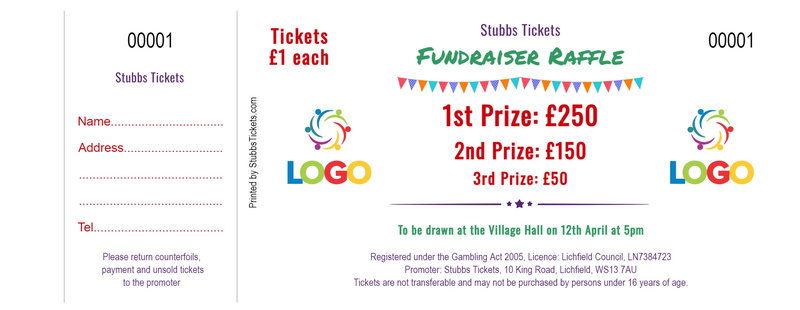
Example raffle ticket design — works for both online and printed raffles
Are Online Raffles Legal in the UK?
Yes — online raffles are legal in the UK, but the rules differ from those that apply to a simple raffle at a village fete. The Gambling Act 2005 sets out different categories of lottery, and which category you fall into determines whether you need to register.
The Key Legal Distinction
The Gambling Act 2005 defines several types of exempt lottery: incidental lotteries (small raffles at single events), private lotteries, customer lotteries, and small society lotteries. Above these sit large society lotteries, which require a Gambling Commission licence. The crucial point for online raffles is this: incidental lottery status does not apply when tickets are sold online. An incidental lottery requires that tickets are sold and the draw takes place at the event itself — selling tickets in advance through any online channel takes you outside this exemption.
This means that to run an online raffle legally in the UK, your organisation will need to be registered as a small society lottery with your local council. Small society lotteries can sell tickets online under Schedule 11 of the Act. If your draws exceed certain thresholds, you'll need a licence from the Gambling Commission instead.
Small Society Lottery Registration
Most charities, schools, PTAs, and community groups running online raffles will operate under a small society lottery registration. The key limits are:
| Requirement | Limit |
|---|---|
| Maximum ticket sales per draw | £20,000 |
| Maximum single prize value | £25,000 |
| Annual aggregate ticket sales | £250,000 |
| Minimum proceeds to good cause | 20% |
| Registration fee | £40 initial, £20 annual renewal |
To register, your organisation must exist for charitable, sporting, cultural, or other non-commercial purposes. You apply to the licensing authority in the area where your principal office is located. Registration is straightforward and usually processed within a few weeks. The Gambling Commission confirms that a registered small society lottery selling tickets online or by telephone is not required to hold a remote gambling licence.
What Must Appear on Online Raffle Tickets
Even when tickets are digital rather than printed, Schedule 11 of the Gambling Act 2005 requires certain information on every ticket:
- The name of the promoting society
- The price of the ticket (which must be the same for every ticket)
- The name and address of the member designated as responsible for promoting small lotteries, or (if applicable) the external lottery manager
- The date of the draw, or information that enables the date to be determined
Many organisers also include the local authority where they're registered and their charity number (if applicable) — this isn't legally required but is considered good practice and builds trust with ticket buyers.
Age Restrictions
Under the Gambling Act 2005, the current legal minimum age for purchasing society lottery tickets is 16. However, we strongly recommend treating 18 as your practical threshold. The National Lottery minimum age was raised to 18 in April 2021, and the government's 2023 Gambling White Paper confirmed plans to raise the society lottery age to 18 "when Parliamentary time allows." As of early 2026, the legislative change has not yet been enacted, but the direction of travel is clear — most major society lottery operators have already voluntarily moved to 18. When selling tickets online, you'll need a mechanism to verify age — this might be as simple as a declaration during checkout, but consider what's proportionate for your draw size.
Social Media Raffles and the Law
A significant number of raffles run through Facebook, Instagram, and other social media platforms do not comply with UK gambling law. Running a raffle through a Facebook group or Instagram post does not exempt you from the Gambling Act. If you're selling tickets for a prize draw through any online channel — including social media — you need proper registration and must comply with all the same rules.
The common practice of asking people to "comment to enter" or "pay via PayPal to this personal account" is, in most cases, operating an unlicensed lottery. The penalties can include fines and criminal prosecution.
Promoting a Raffle Online vs Selling Tickets Online
If your raffle is not registered, an incidental lottery at a fete or a private members' draw, the boundary between promoting online and selling online is the line you must not cross. Promoting is always permitted; selling tickets through any online channel takes an unregistered raffle outside its exemption.
Promoting online (permitted for any raffle):
- Posting about the raffle on social media: the prizes, the draw date, where to buy tickets in person
- Emailing members with details of how to buy in person
- Listing the raffle on your website with in-person sales points
- Sharing photos of prizes on Facebook or Instagram
Selling online (requires small society lottery registration):
- Accepting payment via a website in exchange for ticket numbers
- Taking payment via PayPal, bank transfer, or card and allocating tickets
- Running a Facebook group where members send money and receive numbers
- Using an online form to take ticket orders with payment
The test is where the transaction happens. If money changes hands through a remote channel, the raffle must be a registered small society lottery (or a licensed large society lottery). If the transaction happens in person — even when the buyer heard about the raffle online — any lottery category can apply.
The Free Prize Draw Alternative
A free prize draw is not a lottery at all. Because participants do not pay to enter, the "payment" element of a lottery under the Gambling Act is absent, so no registration or licence is needed. Groups that want an online promotion without registering sometimes structure it as a free draw. For a free draw to be genuinely free:
- No payment may be required to enter: not even a nominal amount
- The free entry route must be clearly communicated: not buried in terms and conditions
- The free route must offer the same chance of winning as any paid route that also exists
A common model is a paid online route alongside a genuinely available free postal route. The Gambling Commission has warned that where the free route is a formality, hidden, discouraged, or disproportionately difficult, the arrangement is treated as a lottery despite the nominal free option. Remember that a genuine free draw raises no ticket revenue; funds come from sponsorship or donations instead.
Using an External Lottery Manager (ELM)
An external lottery manager is a licensed third party that runs lotteries on behalf of societies: the online sales platform, payment processing, and compliance. The Gambling Commission maintains a public register of licensed operators; any ELM you use must appear on it, and using an unlicensed ELM does not relieve your society of its own obligations. ELM fees vary, a percentage of sales or a flat fee per draw, so check that the net amount reaching your cause still meets the 20% minimum after all deductions, and remember that the use of an ELM must be disclosed in the return you file with your local authority.
No Registration? Promote Online, Sell Offline
For groups that don't want to register at all, the practical pattern is to separate online promotion from offline sales: promote the raffle through your website, social media, and email, and sell tickets in person: at events, at the school gate, at club meetings. Your online posts should say clearly where tickets can be bought ("tickets available from the school office and at the Christmas Fair") rather than leaving buyers expecting to pay online.
Need Help With Your Raffle?
Stubbs Tickets has helped over 5,000 schools, PTAs, clubs, and charities run successful raffles for more than 25 years. Whether you need printed tickets, advice on compliance, or help getting started — we're here to help.
Order Raffle Tickets Get in TouchTypes of Online Raffle
Not all online raffles work the same way. The right approach depends on your organisation, your audience, and what you're trying to achieve.
Fully Online Raffles
Everything happens digitally: ticket sales, payment collection, entry management, and the draw itself. Buyers visit a website, choose their tickets, pay online, and receive a digital ticket confirmation. The draw is conducted using a random number generator or similar tool, and winners are notified electronically.
This approach offers the widest reach and the lowest overhead, but requires a reliable platform and careful attention to data protection and payment security.
Hybrid Raffles (Online Sales + In-Person Draw)
Tickets are sold online, but the draw takes place at a physical event — perhaps a school fete, charity dinner, or community gathering. This combines the wider reach of online ticket sales with the excitement and transparency of a live draw.
Hybrid raffles work particularly well for organisations that have an existing event calendar. You sell far more tickets than you would on the night alone, but the draw itself remains a focal point of the event.
Live-Streamed Draws
A growing trend, particularly since 2020, is to run the draw live on Facebook Live, YouTube, Instagram, or Zoom. This gives remote ticket buyers the same sense of excitement and transparency as being present at a physical draw, while maintaining the convenience of a fully online process.
Prize Competitions (Not Technically Raffles)
Some online "raffles" are actually structured as prize competitions, which operate under different rules. In a prize competition, entry requires a degree of skill, judgement, or knowledge — not just the purchase of a ticket. Prize competitions can be run for profit and don't require lottery registration, but they must be structured carefully to avoid falling foul of gambling law. If there's no genuine element of skill, it's a lottery, not a competition, and the full Gambling Act requirements apply.
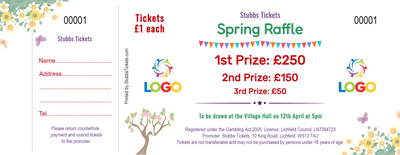
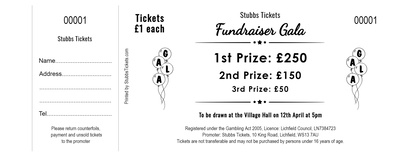
Popular raffle ticket designs — customise with your organisation's details
How to Set Up an Online Raffle
Setting up an online raffle involves more planning than a traditional paper-ticket draw. Here's a step-by-step walkthrough of the process.
1. Check Your Legal Status
Before anything else, confirm that your organisation is eligible to run a lottery and that you have the necessary registration in place. If you're not already registered as a small society lottery with your local council, allow a few weeks for the application to be processed. You cannot legally sell tickets until registration is confirmed.
2. Define Your Raffle
Decide on the basics: how many tickets you'll sell, the ticket price, the prizes on offer, and the draw date. Remember the legal maximums — £20,000 in ticket sales per draw and £25,000 maximum single prize value for a small society lottery.
Setting a fixed number of tickets (rather than unlimited) creates scarcity and can drive faster sales. It also makes it easier to manage the draw and calculate your expected fundraising income.
3. Choose Your Platform
You'll need a way to sell tickets online, collect payments, and manage entries. Options range from purpose-built online raffle platforms to general e-commerce solutions adapted for ticket sales. Key features to look for include:
- Secure payment processing (credit/debit cards as a minimum)
- Automatic ticket numbering and allocation
- Buyer data collection that complies with GDPR
- The ability to display all required legal information on digital tickets
- A mechanism for running or recording the draw
- Mobile-friendly design (most buyers will be on their phones)
4. Set Up Payment Collection
Online raffle payments need to be handled through a proper payment processor. Cash, bank transfers, and PayPal "friends and family" payments are problematic — they make it difficult to track sales, issue refunds, or demonstrate compliance.
Choose a payment method that gives you a clear audit trail and integrates with your ticket management system. Card payments are the standard expectation for online purchases.
5. Create Your Raffle Page
Your raffle needs a dedicated page (or pages) that includes all the required legal information, clear details about the prizes, the ticket price, the draw date, and how winners will be notified. Good raffle pages also include:
- High-quality images of the prizes
- A clear explanation of what the proceeds will fund
- Terms and conditions
- A countdown timer to the draw date
- Social proof (how many tickets sold, testimonials from previous winners)
6. Test Everything
Before going live, test the entire purchase flow from start to finish. Buy a test ticket yourself. Check that confirmation emails are sent, that ticket numbers are allocated correctly, and that payment is processed properly. A broken checkout will kill your raffle before it starts.
How to Sell Raffle Tickets Online
Selling raffle tickets online is fundamentally different from selling them in person. You lose the personal ask — the PTA volunteer at the school gate, the charity collector on the high street — and replace it with a digital transaction that needs to be compelling enough to convert a casual browser into a buyer.
Pricing Your Tickets
Online raffle tickets tend to be priced slightly higher than traditional paper tickets, because the convenience of online purchasing and the wider prize pools justify it. Common price points in the UK range from £1 to £5 per ticket. Every ticket is the same price, so there are no bundle deals such as 5 tickets for £10.
Every ticket must be sold at the same price: you cannot offer discounts or bundle deals that mean some tickets cost less than others.
Payment Methods
Card payments are essential. Beyond that, consider offering:
- Apple Pay and Google Pay (significantly increases mobile conversion rates)
- PayPal (as a checkout option, not as a direct personal payment)
- Open Banking payments (lower fees, faster settlement)
The easier you make it to pay, the more tickets you'll sell. Every additional step in the checkout process loses buyers.
One boundary to set in your checkout: restrict sales to buyers in Great Britain. A small society lottery registration covers sales in England, Scotland, and Wales: selling into other jurisdictions (including Northern Ireland, which has its own lottery law) can put you in breach of their gambling rules. A simple address-country check at checkout is enough for most draws.
Data Protection (GDPR)
When you sell raffle tickets online, you're collecting personal data — names, email addresses, payment details, and potentially more. Under UK GDPR, you must:
- Have a clear privacy policy explaining how data will be used
- Only collect the minimum data necessary
- Store data securely
- Not use buyer data for marketing unless they've explicitly opted in
- Delete data when it's no longer needed
This is particularly important for schools and PTAs, where ticket buyers may include parents sharing children's details.
Digital Ticket Delivery
Buyers need confirmation that their purchase was successful and which ticket numbers they hold. This is typically handled by email confirmation, an on-screen confirmation page, or both. Some platforms also offer SMS confirmation. Whatever method you use, the digital ticket must include all the legally required information.
Record Keeping
Keep detailed records of every ticket sold: the ticket number, the buyer's name and contact details, the date of purchase, and the payment reference. These records serve multiple purposes — they're needed for the draw itself, for compliance with gambling regulations, and for your annual lottery return to the local council.
Running an Online Raffle for Charity
Online raffles have become one of the most effective fundraising tools available to UK charities. The ability to reach supporters beyond your immediate geography, combined with lower running costs than traditional events, means that a well-run online charity raffle can significantly outperform its offline equivalent.
Why Charities Are Moving Online
Traditional charity raffles are limited by physical reach. You can only sell tickets to people who walk past your stall, attend your event, or receive a postal mailing. An online raffle removes those barriers entirely. A small local charity can reach supporters across the whole country, former donors who've moved away, and entirely new audiences through social media sharing.
The economics are compelling too. There are no printing costs for tickets, no volunteer hours spent selling door-to-door, and payment collection is automatic. The main costs are the platform fee and time spent on promotion.
Charity-Specific Legal Requirements
Charities running online raffles must still comply with the Gambling Act 2005. The most common route is small society lottery registration with the local council. Charities must ensure that at least 20% of proceeds go to the charitable purpose — though in practice, most aim for a much higher percentage.
If your charity plans to run multiple draws per year or expects annual ticket sales above £250,000, you may need a lottery operating licence from the Gambling Commission rather than simple council registration.
Maximising Donations Through Online Raffles
Smart charities use the raffle as a gateway to broader engagement. The raffle ticket purchase is the initial transaction, but the confirmation email, the draw announcement, and the follow-up communications are all opportunities to tell your story, invite further donations, and build a long-term relationship with supporters.
Consider adding a "donate extra" option at checkout, allowing ticket buyers to add a voluntary donation on top of their ticket purchase. Many supporters are happy to give more when the option is presented at the right moment.
Online Raffles for Schools and PTAs
Schools, PTAs, and parent-teacher organisations are among the biggest users of online raffles in the UK. The shift to digital has been transformative for school fundraising — particularly for organisations that previously relied entirely on selling paper tickets at the school gate.
Why Online Works for Schools
The traditional school raffle model depends on a small number of parent volunteers selling tickets in person, usually during drop-off and pick-up times. This limits sales to parents who physically attend the school — missing working parents, grandparents, extended family, and anyone who'd support the school but doesn't pass through the gate regularly.
An online school raffle platform solves this by making tickets available 24/7. A link shared via the school newsletter, parent WhatsApp groups, and social media reaches the entire school community and beyond. Many PTAs report doubling or tripling their raffle income after moving online.
Setting Up a PTA Online Raffle
The process is the same as for any online raffle, with a few school-specific considerations:
- Registration: Your PTA or Friends of School group needs to be registered as a small society lottery with the local council if it isn't already. Many PTAs are surprised to learn this requirement applies to them.
- Safeguarding: Be thoughtful about what information you publish online. Avoid publishing children's names or images in connection with the raffle without proper consent.
- Communication channels: School newsletters, parent mail systems, class WhatsApp groups, and the school's social media accounts are your primary promotion channels. The more channels you use, the more tickets you'll sell.
- Prize sourcing: Local businesses are often willing to donate prizes for school raffles, especially when they'll be promoted to the school's parent community. Approach them early and offer clear visibility in return.
Keeping It Simple
The most successful school online raffles are the simplest ones. One clear ticket price, a manageable number of attractive prizes, a draw date tied to a school event (end of term, summer fete, Christmas fair), and relentless promotion through every available channel. Overcomplicating the process loses parents along the way.
How to Run the Draw Online
The draw is the climax of your raffle, and getting it right online requires thought about both fairness and transparency.
Random Number Generators
Most online raffle draws use a random number generator (RNG) to select the winning ticket. For small draws, a simple online tool that generates a random number within your ticket range is sufficient. For larger draws, or where greater scrutiny is expected, use a certified RNG or one provided by your raffle platform.
The key requirement is that the draw must be genuinely random. You cannot influence the outcome, and you should be able to demonstrate that the process was fair if challenged.
Live-Streaming the Draw
Broadcasting the draw live adds transparency and excitement. Options include Facebook Live, YouTube Live, Instagram Live, or Zoom. The live audience can see the winning numbers being generated in real time, which builds trust — particularly important for online raffles where buyers haven't met the organisers face-to-face.
Tips for a successful live-streamed draw:
- Announce the date and time well in advance
- Test your streaming setup before going live
- Have a presenter who's comfortable on camera
- Show the RNG or draw process clearly on screen
- Announce each winner clearly and confirm the prize
- Record the stream so it can be shared afterwards
Recording and Documentation
Whether you live-stream or not, document the draw thoroughly. Record which numbers were drawn, in what order, and who the corresponding ticket holders are. This documentation is important for compliance and for resolving any disputes.
Notify winners promptly — by email and phone if possible. Publish the results on your raffle page and social media channels (with winners' consent). Transparency at every stage builds trust for future raffles.
Prize Fulfilment
Online raffles often attract buyers from a wider geographic area than traditional draws, so you may need to post prizes rather than handing them over in person. Factor in postage and packaging costs when budgeting, and communicate clearly with winners about delivery timescales.
Promoting Your Online Raffle
A raffle that nobody knows about raises nothing. Promotion is where many online raffles fall down — the organisers put all their effort into setting up the technical side and then wonder why tickets aren't selling.
Email Marketing
If your organisation has a mailing list, this is your most effective channel. Email open rates for charity and community communications are typically much higher than commercial email, and you can share the raffle link directly. Send an announcement email when the raffle launches, a reminder at the halfway point, and an urgency email in the final days before the draw.
Social Media
Share the raffle across all your organisation's social media channels. Facebook and Instagram are typically the most effective for UK raffle promotion. Key tactics include:
- Regular posts with countdown reminders
- Prize spotlight posts (one prize at a time, with images)
- Testimonials from previous raffle winners
- Behind-the-scenes content showing what the funds will support
- Shareable graphics that supporters can repost
Encourage committee members, volunteers, and supporters to share the raffle link on their personal profiles. Personal recommendations drive far more ticket sales than organisational posts.
Website Integration
Don't hide the raffle in a sub-page. Feature it prominently on your homepage, with a clear call to action. If your organisation has a blog, write a post about the raffle and what the funds will go towards.
QR Codes
Bridge the gap between offline and online by including QR codes on printed materials — posters at the school gate, flyers in local shops, notices in community venues. The QR code links directly to the online ticket purchase page, making it easy for people to buy on their phones.
Timing and Urgency
The most successful online raffles have a defined ticket limit or a clear deadline. "Only 500 tickets available" or "Draw closes Friday at 8pm" creates urgency that drives purchases. Without a sense of scarcity or deadline, potential buyers put off purchasing and often forget entirely.
Online Raffle vs Traditional Raffle
Both approaches have their strengths, and many organisations find that a hybrid model — combining online ticket sales with a traditional in-person draw — gives the best of both worlds.
Advantages of Online Raffles
- Wider reach: You're not limited to people who attend a specific event or walk past your stall
- Convenience: Buyers can purchase tickets anytime, anywhere, from their phone
- Lower overhead: No ticket printing costs, no physical distribution, no cash handling
- Better data: You have a complete digital record of every sale, useful for future fundraising
- Automatic payments: No chasing cash or counting coins
- Scalability: Selling 2,000 tickets online takes the same effort as selling 200
Advantages of Traditional Raffles
- Simplicity: Paper tickets, a bucket, and a hand to draw — no technology needed
- Personal connection: Face-to-face sales build relationships and community
- Lower regulation: Incidental (exempt) lotteries at single events have minimal legal requirements
- Trust: Some supporters, particularly older demographics, are more comfortable with physical tickets
- Instant gratification: Buy a ticket, watch the draw, collect the prize — all in one event
- No platform costs: Traditional raffles have zero technology fees
When Online Makes Sense
Online raffles are most effective when your supporter base is geographically spread, when you want to maximise ticket sales beyond a single event, or when you don't have enough volunteers for door-to-door or event-based selling.
When Traditional Makes Sense
Traditional raffles still have the edge at events where you have a captive audience — a school fete, a charity dinner, a sports club presentation evening. The energy of a live draw with a room full of ticket holders is hard to replicate online.
The Hybrid Approach
Many of the most successful fundraising raffles combine both. Sell tickets online in the weeks before the event to build momentum and reach remote supporters, then continue selling at the event itself. Run the draw live at the event but stream it online so remote ticket holders can watch. This approach consistently raises more than either method alone.
Ready to Run Your Raffle?
Whether you're running an online raffle, a traditional draw, or a hybrid — Stubbs Tickets has been helping UK fundraisers for over 25 years. Talk to us about custom printed raffle tickets and getting your next raffle right.
Order Raffle Tickets Get in TouchOnline Raffle FAQs
Got questions about online raffles? Here are answers to the most common queries.