Many fundraisers use “raffle” and “competition” interchangeably when planning their online events, but legally they’re completely different activities with distinct rules, registration requirements, and commercial possibilities. Understanding these UK raffle vs competition laws could save you from serious legal complications.
Important Legal Disclaimer
This guide covers UK law, specifically the Gambling Act 2005 which applies to England, Scotland, and Wales. Northern Ireland operates under different legislation (the Betting, Gaming, Lotteries and Amusements (NI) Order 1985) with its own requirements.
In This Guide
Key Takeaways
- Raffles involve random selection and are regulated under the Gambling Act 2005
- Prize competitions require genuine skill and are regulated by advertising standards
- Charities can run raffles with proper registration but businesses generally cannot
- Free draws sit outside lottery regulation entirely
- Choosing the wrong structure can result in operating an unlicensed lottery
- Lottery tickets cannot be sold to under-16s (not under-18s like most gambling)
What is a Raffle (Lottery)?
In UK law, a raffle is classified as a lottery under the Gambling Act 2005. For an event to qualify as a lottery, it must have three key elements:
- Payment required to enter (even £1 counts as payment)
- Random selection of winners (no skill involved)
- A prize awarded to the winner
Raffles can only be operated by qualifying organisations such as charities, schools, PTAs, and community groups. They must register with their local authority and follow strict rules about how proceeds are used. Crucially, raffles cannot be run for commercial profit — at least 20% of proceeds must go directly to the organisation’s charitable purposes.
Age Restrictions
Raffle tickets cannot legally be sold to anyone under 16 years old. This is different from most other forms of gambling which have an 18+ age limit. Make sure volunteers checking IDs are aware of this specific age requirement for lotteries.
Important Legal Point
If your online event meets the three lottery criteria above, it’s legally a raffle regardless of what you call it. Calling it a “competition” doesn’t change the legal classification when it comes to the legal requirements for prize draws.
What is a Prize Competition?
A prize competition requires participants to demonstrate genuine skill, judgement, or knowledge to enter or win. Unlike raffles, competitions:
- Can be run by commercial businesses for profit
- Are not classified as gambling when the skill element is genuine
- Are regulated by the Advertising Standards Authority (ASA) rather than the Gambling Commission
- Have fewer restrictions on how proceeds are used
The key difference is that winners are selected based on merit rather than chance. This could involve answering questions, demonstrating creativity, or showing expertise in a particular area.
The Skill Test: What Counts as Genuine Skill?
The skill element in a competition must be genuine — token questions won’t pass legal scrutiny. The Gambling Commission has made clear that trivial skill barriers don’t remove an event from lottery regulation.
Genuine Skill Tests
- Creative writing or photography contests
- Detailed knowledge questions requiring research
- Problem-solving challenges
- Subjective judgement tasks (best recipe, design, etc.)
Token Questions (Not Sufficient)
- “What is 2+2?” or similar basic maths
- “What colour is grass?”
- Questions with obvious single answers
- Multiple choice with one clearly correct option
If your “skill” question can be answered correctly by virtually everyone, it’s likely a token barrier and your event will still be classified as a lottery.
Acceptable Evidence for Skill-Based Competitions
When running skill-based competitions, you should maintain proper documentation to demonstrate the genuine skill element:
- Judging criteria and scoring sheets for creative contests
- Expert panel qualifications for subjective competitions
- Question sources and difficulty validation for knowledge tests
- Entry examples showing range of skill levels demonstrated
- Clear competition rules outlining skill requirements
- Records of entries that didn’t meet skill thresholds
This documentation protects you if authorities question whether your skill test was genuine and substantial.
Prize Value Limits and Legal Requirements
Different types of raffles and competitions have varying prize value limits under UK law:
| Type | Maximum Prize Value | Additional Requirements |
|---|---|---|
| Small Society Lottery | £25,000 per draw | Max £20,000 ticket sales per draw, £250,000 annual sales limit |
| Incidental Non-Commercial Lottery | £500 total prizes per draw | Tickets sold and drawn at same event, max £100 expenses |
| Private Society Lottery | No specific statutory cap | Members only, all proceeds to prizes and expenses (no profit) |
| Work Lottery | No specific statutory cap | Workplace colleagues only, all proceeds to prizes and expenses |
| Prize Competitions | No statutory limit | Must follow ASA guidelines |
| Free Draws | No statutory limit | Must be genuinely free to enter |
The incidental non-commercial lottery category covers most school fete raffles and similar events — these are limited to £500 total prize value, with tickets sold and the draw taking place at the same event.
Ticket Information Requirements
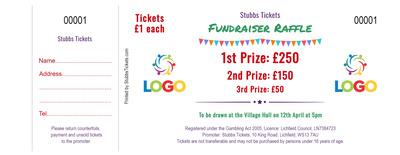
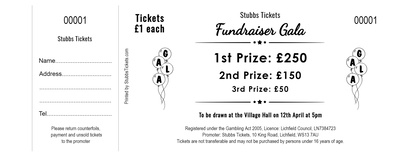
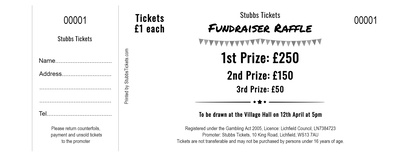
Since raffle tickets must include specific legal information, ensure your tickets display: society name, promoter name and address, draw date, and ticket price. This is particularly important for online raffles where tickets may be digital.
Prize Value Calculation
Prize values include the retail value of all prizes in a single draw, not just the top prize. Multiple smaller prizes can quickly add up to breach limits.
Free Entry vs Paid Entry Rules
Free draws — where no payment is required to enter — sit outside lottery regulation entirely. This creates interesting possibilities for online organisers:
| Entry Type | Legal Classification | Regulation | Who Can Run |
|---|---|---|---|
| Paid entry + random draw | Lottery/Raffle | Gambling Act 2005 | Qualifying organisations only |
| Free entry + random draw | Free draw/sweepstake | ASA/CAP Code | Anyone (including businesses) |
| Paid entry + skill test | Prize competition | ASA/CAP Code | Anyone (including businesses) |
| Free entry + skill test | Prize competition | ASA/CAP Code | Anyone (including businesses) |
Many commercial promotions use the “free entry route” requirement, where participants can enter both by purchase and through a free method, to avoid lottery classification.
The Free Entry Route Explained
The Gambling Commission’s guidance is specific about what constitutes a genuinely “free” entry method. Under the Act, a free entry route must not require participants to pay more than the normal cost of communication. This means:
- Post must be charged at first or second class rates (no premium postage required)
- Phone calls must use normal landline rates (no premium rate numbers)
- Text messages must use standard SMS rates (no premium shortcodes)
- Online entries must not require paid subscriptions or purchases
- Email entries must be free to send from any standard email provider
The free route must also be equally promoted and given equal chance of winning. If you favour paid entries in selection or make the free route difficult to find, authorities may still classify your promotion as a lottery.
Normal Rate Payment Rule
Under Schedule 2 of the Gambling Act 2005, an important exception exists for normal commercial transactions. Paying the normal price for a product or service doesn’t constitute “payment to enter” a lottery if the product is available at the same price without the promotion.
This means charities running promotions alongside product sales can structure them as competitions rather than raffles, provided:
- The product is available at the same price without entering the promotion
- Customers receive full value for their purchase regardless of the promotion
- Entry is not dependent on purchasing multiple items at inflated prices
- The promotion is clearly separate from the commercial transaction
This is particularly relevant for charity shops, school uniform sales, or fundraising events selling merchandise alongside prize draws. Many charity organisers miss this opportunity to run compliant promotions without lottery registration requirements.
Online Platform Restrictions
Social media platforms have their own rules that apply regardless of UK law compliance:
Facebook and Instagram
- Prohibit raffles and lotteries run by commercial businesses
- Allow charities to run raffles with proper disclaimers
- Require clear separation from platform endorsement
- Ban promotion through personal profiles (use Pages only)
- Require compliance with local gambling laws
Twitter/X
- Generally permits prize competitions and free draws
- Restricts gambling-related content promotion
- Requires compliance with advertising standards
TikTok
- Prohibits most gambling-related content
- Allows skill-based competitions with restrictions
- Requires age-appropriate targeting
Platform Compliance Tip
Even if your raffle is legally compliant, violating platform rules can result in account suspension or content removal. Always check current platform policies before promoting your event. Platform policies change frequently, so verify rules at the time of planning your campaign.
Why This Matters for Online Organisers
Choosing the wrong structure can have serious consequences. If you run what’s legally a lottery without proper registration, you could be operating an unlicensed gambling activity. This can result in:
- Criminal prosecution under the Gambling Act 2005
- Unlimited fines for the organisation and individuals
- Seizure of all proceeds by authorities
- Damage to your organisation’s reputation
For online events, the rules apply regardless of whether you’re using social media, dedicated websites, or email campaigns. The platform doesn’t change the legal classification.
Which Should You Choose?
Your choice depends on your organisation type and objectives:
For Charities, Schools, and Community Groups
Raffles are usually the best choice if you want to charge entry fees. Charities choosing raffles benefit from familiar procedures and supporter expectations. You’ll need to register with your local authority, but this gives you clear legal protection and established procedures to follow.
For Commercial Businesses
Prize competitions with genuine skill tests are typically your only option if you want to charge entry. Alternatively, consider free draws funded through sponsorship or as part of marketing campaigns.
Hybrid Approaches
Some organisations use creative combinations, such as:
- Running a free draw for marketing, funded by sponsors
- Combining skill competitions with random elements (note: if the final selection is random, it may still be classified as a lottery)
- Offering both paid raffle tickets and free competition entry
Common Examples of Each
Let’s examine real-world scenarios to clarify the differences:
PTA Christmas Draw
Structure: £2 per ticket, winners drawn randomly
Classification: Raffle (lottery)
Requirements: Register with local authority, follow licensing requirements
School Fete Raffle
Structure: £1 per ticket, drawn at the fete
Classification: Incidental non-commercial lottery
Requirements: Max £500 prizes, tickets sold and drawn at same event
Social Media “Guess the Number”
Structure: Free entry, correct or closest guess wins
Classification: Prize competition (if genuinely testing skill/knowledge)
Requirements: Follow ASA guidelines for promotional competitions
Photography Contest
Structure: £10 entry fee, judged by panel
Classification: Prize competition
Requirements: Clear judging criteria, follow competition regulations
For guidance on running online raffles legally, our comprehensive guide covers registration requirements and compliance steps.
Frequently Asked Questions
Traditional raffles, of course, still run on printed raffle tickets: numbered books, matching stubs, a drum and a drawn winner.
Ready to Run Your Legal Raffle?
If you’re a charity, school, or community group planning a raffle, our professionally designed tickets ensure compliance while maximising sales. All designs include space for your required legal text and registration details.